
Tuesday, March 17, 2015
Cyprès-Musc by Creed
I was at first uneasy about this scent.
It struck me as odd for the Creed lineup, but it has grown on me
recently for a number of reasons. CM is a fairly straightforward scent
that is the same from when you spray all the way through the drydown. It
is an intense, dusky cypress with a little citrus, musk, and light
amber. It is soapy and mossy at the same time. This reminds me of
country part of town and country fragrance pairs popular in the 19th
Century. Mossy, dewy country roads in the heart of Arles or even
Normandy with Van Gogh's cypresses blowing in the wind beneath the
starlight.


Creed Epicea
A grand fragrance indeed! Epicea reminds me
of something the 17th Century Russian aristocracy would have worn
(along with their fur kaftans and leather boots before Peter the Great
forced them to adopt silk shoes, bows, knickers, silk stockings, and
powdered wigs) around a fire in an ancient pine forest perhaps roasting a
wild boar. The pine, smoke, and birch tar are founded in powdery,
slightly sour ambergris and slightly sweet, but still robust musk.


Helmut Lang Eau de Cologne
Helmut
Lang Eau de Cologne has somewhat of a misleading name—one would think it is a
light, airy citrus fragrance—but in fact, the cologne demarcation refers to the
concentration rather than style. The opening is a bit fuzzy with lavender, dark
citrus, and rosemary. This soon gives way to the soft, floral heart of jasmine,
lily, heliotrope and rose. The powdery, musky base is comprised of sandalwood,
cedar, orris, and musk.
Helmut
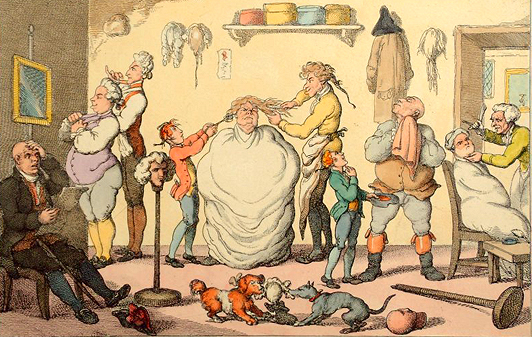
Lang EdC is where Victorian barbershop meets powdered wig and 1950s machismo
though it is nowhere near as brusque or imposing as any of them. This fragrance
has a certain “volume” to it though it is light and never cloying—perhaps from
the buttery and “fatty” quality of the base.Be forewarned that Helmut Lang EdC has a modern, laundry detergent edge briefly that may offend some classicists. I think it is a better approximation of the tailoring industry on Saville Row than a recent "sartorial" release by a well-known English firm.
Wednesday, March 11, 2015
Lorenzo Villoresi Musk
While Villoresi's Musk is far from what most would consider a musky fragrance, one must examine the sheer artistry and quality of ingredients. The opening and considerable parts of the heart are a soft yet persistent natural (and very expensive) Bulgarian rose absolute sharpened by galbanum and a slight spicy/earthy/fougere accord from the geranium. After about a half of an hour, the marvelous musk/oakmoss/sandalwood base emerges and lingers for some time. The base is not "musky," but rather powdery with wisps of tonquin musk.
Musk is a soft, yet substantial fragrance. Another reviewer compares it to the rich velvety fragrances of the 18th Century, but I think it is more in line with the rich, unctuous scents of Arabie popular in Victorian Europe at the end of the 19th Century like Hammam Bouquet. The strong rose accord could make this scent verge on the feminine, but it is not overly so. I do not smell the harsh synthetic accords of which other reviewers speak. The luxurious quality is beyond reproach. Bulgarian Rose Absolute tends to have a metallic property, which is what other may be detecting.
All in all, a dash of good taste in an otherwise tasteless world.

Musk is a soft, yet substantial fragrance. Another reviewer compares it to the rich velvety fragrances of the 18th Century, but I think it is more in line with the rich, unctuous scents of Arabie popular in Victorian Europe at the end of the 19th Century like Hammam Bouquet. The strong rose accord could make this scent verge on the feminine, but it is not overly so. I do not smell the harsh synthetic accords of which other reviewers speak. The luxurious quality is beyond reproach. Bulgarian Rose Absolute tends to have a metallic property, which is what other may be detecting.
All in all, a dash of good taste in an otherwise tasteless world.
Wednesday, August 28, 2013
The Rose of Arabie: Hammam Bouquet
Having
been in the midst of moving and law school exams, I have not had much time to
post, but I hope to get started again soon. I recently moved into a quaint
Victorian boardinghouse in the historic downtown of Redlands, California and it
really reminds me of the quality building modern society has all but forgotten:
oak crown molding, door frames, gallery balconies, attics, cellars,
leaded-crystal door knobs, lath and plaster walls, etc. Despite it being a
terrible time in the year to wear heavy Victorian fragrances, I feel inspired
to mention Hammam Bouquet by Penhaligons—vintage of course. How vintage?
Perhaps 5-10 years old—and believe me, it makes a big difference. HB was
reformulated within the last couple of years and is no longer a powdery,
animalic rose; now it is just powdery.
Hammam
Bouquet, in its proper form (vintage extract would be even better) is basically
a seminar in Victorian tastes and all things that were admired, at least in
fragrance, during this era in history. Tastes changed slowly before the
commercialization of society starting in the 1920s. In fact, it took almost
half a century for the older, lighter eau de cologne styles famed by Napoleon
took lose footing to the newer, heavier, musky fragrances inspired by the
Orient (not Orient as in Japan and China as we would think today, but as in
Arabia, Turkey, Morocco, Persia, etc.—the common meaning of the term at the
time). Turkish, Moroccan, and the awe-inspiring Bulgarian Rose Otto, Grasse
Jasmine, civet, musk, oppoponax, myrrh, incense gums, rich balsams, Venetian
Orris, French lavender, and Mysore Sandalwood would have been just a few of the
rich ingredients available to the perfumerer.
Alas,
Penhaligons is now going the way of all the other traditional English
houses—into the trash bin of history that is.

Saturday, August 17, 2013
The Cologne to End All Colognes
Today I
will be discussing the unbeatable (at least by modern standards) Acqua di
Colonia by the renowned perfume house of Lorenzo Villoresi. While not a “classic”
in the sense of age as it was released around 1996, it does it better than any
classical citrus eau de cologne available on the market today. If we were
travel back to the 18th Century with a bottle, I have no doubt it would be
instantly recognizable to the ruling classes for its brilliance, simplicity,
and superb ingredients. Remember, a good cologne lives and dies by the quality
of its citrus oils.
I am aware
that traditional eaus do not excite the modern palette, but once must make a
concerted effort to at least experience and enjoy Acqua di Colonia for what it
is—a light, refreshing citrus cologne with herbal and light musky aspects with
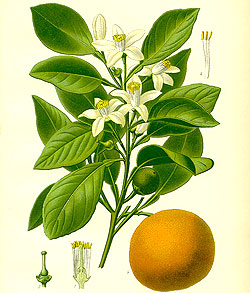
the hauntingly and too often poorly portrayed neroli flower. Surprisingly,
Villoresi uses a bit of vegetal ambrette seed musk to add depth and extend the
fragrance a couple of hours since the original deer musk is no longer
available.
The only
cologne I have ever found to be comparable is vintage Farina Gegenuber (about
which I will post in the future and naturally own a couple of flacons), which
unfortunately, has not be produced since the 1960s, which undoubtedly fell out
of style in the age of Eau Sauvage and Paco Rabanne.
Acqua di
Colonia is certainly worth at least a sampling and I think you will be
pleasantly surprised. I would buy now since this is a title that is not likely
to endure and will likely face a monstrous price increase given the higher than
gold prices of many of the ingredients used.
King Iris
Iris
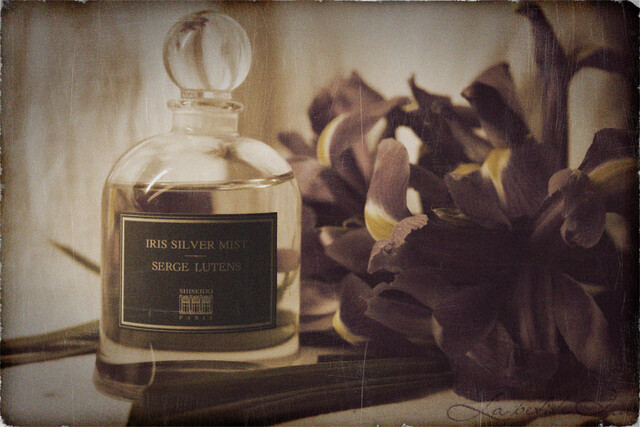
Silver Mist by Serge Lutens (I house I generally despise) is one of the few
modern fragrances I would dare to discuss on this blog. It takes its place
beside the queen of irises, the regal and long lost Iris Gris. ISM is cold,
powdery, spicy, rooty, peppery, and above all else, irisy. In no other extant
fragrance is there such a high concentration of orris compounds.
The
opening is pungent like slicing open a beat and inhaling deeply. There is
pepper, root, earth, and a bit of doughy carrot. This phase quickly gives way
to the cold, icy orris heart of the fragrance. The orris is of top quality in
conjunction with the rare and expensive Robertet iris base.
To my
knowledge, Silver Iris Mist is the only fragrance on the market that contains
large quantities of natural orris butter and other natural orris compounds. Is
it as good as Iris Gris? Probably not, but you could do much worse. In the
heart, the icy orris root comes to the fore. The base contains a little
sandalwood and a slightly soapy musk reminiscent of the long lost Gris (do not
be fooled by MPG Iris Bleu Gris as it has nothing to do with Iris Gris).
I would
suggest buying ISM while it is still available if you are interested in the
best available iris fragrance. Is it cheap? Certainly not, but the quality of
the iris compounds justifies the price and may, of course, only be available in
the States for a short period of time—ISM was once a Paris exclusive.
Subscribe to:
Posts (Atom)